


What Are the Top Interactive Game Wall Types in 2026?
In 2026, an Interactive Game Wall can turn a blank surface into a shared play space. But the right setup depends on who will use it, where it will sit, and how much maintenance is practical. Projection-based walls create large, flexible play areas. LED and touchscreen walls offer bright visuals and direct interaction. Camera- and sensor-driven systems let players move, jump, or gesture without holding a controller. Some venues also choose climbing or hybrid walls, combining physical activity with digital games.
Each type has trade-offs. Projection systems may need controlled lighting and clear floor space. Touch displays can feel responsive, though their size and upkeep affect cost. Motion-based games invite group play, but tracking can be less reliable when several people move at once. Small details matter. A bright window can wash out an image; a crowded room can disrupt a sensor.
This guide compares the leading wall types through practical criteria: interaction style, audience, installation needs, durability, and content flexibility. These considerations reflect common design questions, not a guarantee of performance. Specifications vary by product, so buyers should confirm them with manufacturers and test games in the intended space. A short demo helps. So does asking who cleans, updates, and repairs the system. The most impressive wall is not always the best fit. Sometimes, the simpler option keeps players engaged longer.
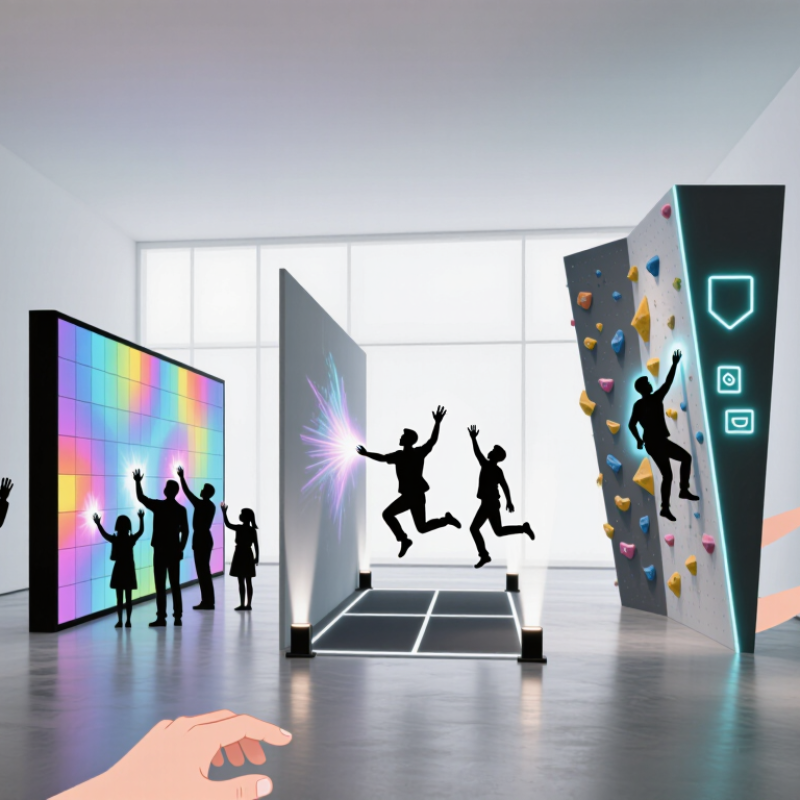
How Interactive Game Walls Work in 2026
An interactive game wall turns a flat surface into a shared play area. In 2026, common types include projection-based walls, touch-sensitive displays, and modular LED panels. Each supports different spaces and budgets. A projector can cover a large wall, while a touch display offers direct, precise interaction. LED panels stay bright in well-lit rooms, but their size and setup can raise costs. Simple idea.
A game begins when software displays targets, paths, or moving objects. A camera or depth sensor tracks gestures, position, or movement across the play area. Touch-based systems detect contact directly. The software compares each input with the game rules, then updates the screen with points, sounds, or new challenges. A player might swipe at a virtual ball and see it bounce within a fraction of a second. Fast feedback matters; even a small delay can make play feel awkward.
For reliable results, installers calibrate sensors to the wall and test them under the room’s actual lighting. Nearby windows, reflective surfaces, and crowded play areas can affect tracking. Small calibration errors matter. Good design also considers reach, clear instructions, and enough room for several players. Not every game wall works equally well for every age or ability. Testing with real visitors often reveals details that a demo misses.
