


What Are the Top Types of Mining Trucks in 2026?
Mining Trucks are not one machine category. A surface mine may need rigid-frame haul trucks for long, heavy cycles, while smaller pits often favor articulated dump trucks on uneven, muddy roads. Underground operations rely on compact low-profile trucks that fit narrow drifts and tight turning areas. Electric-drive, trolley-assist, and autonomous models add further choices, but their value depends on site design and operating conditions.
The investment case is growing. The International Energy Agency’s Global Critical Minerals Outlook 2024 estimates that the market value of key energy-transition minerals could reach about US$770 billion by 2040 under its Announced Pledges Scenario. That forecast signals expanding pressure on mineral supply chains, not a direct forecast for truck sales. Equipment specifications offer a closer comparison: Caterpillar lists the 797F rigid haul truck at a 363-tonne payload, while Volvo lists the A60H articulated hauler at 55 tonnes. The gap is striking. It also shows why capacity alone can mislead.
A truck’s real performance depends on haul distance, road condition, grade, loading equipment, fuel or charging access, and maintenance support. A massive payload may look impressive on paper, yet cause bottlenecks if the loading fleet cannot keep pace. This guide compares the leading truck types expected to matter in 2026, with attention to their applications, strengths, and trade-offs. No single type wins every mine. The right choice is usually less obvious than a specification sheet suggests.
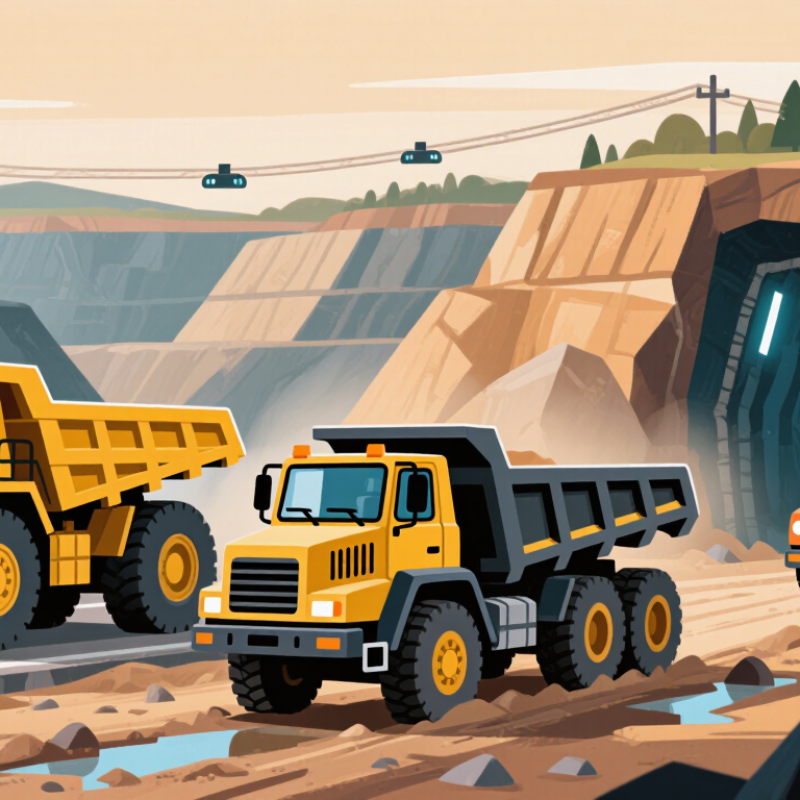
Mining Truck Classes by Payload Capacity and Operating Environment
Mining truck classes are practical payload bands, not a universal standard. Articulated trucks commonly carry about 25–45 tonnes and suit soft, wet ground, tight bends, and short mine roads. Mid-size rigid trucks, roughly 45–150 tonnes, work well on established haul roads and in smaller open pits. Large rigid trucks may carry 150–300 tonnes; ultra-class units exceed 300 tonnes and need wide, carefully maintained roads. The figures are indicative, since payload limits vary with body design, altitude, and site conditions.
Ground conditions change the useful payload. Articulated trucks can keep moving on uneven, muddy routes, while rigid trucks generally favor firm surfaces and longer hauls. Bigger is not always better. Oversized units can increase road wear and create slowdowns at loading areas. The International Energy Agency’s Global Critical Minerals Outlook 2024 reports that average copper ore grades have fallen by around 40% over roughly three decades, increasing the amount of material that may need moving for a given output. That trend makes matching payload to route, rolling resistance, and loading equipment more important than choosing the largest class. In practice, a wet ramp can overturn a neat spreadsheet. Check payload records against seasonal road conditions; the perfect class on paper may still be wrong in the field.
