Top 10 Walnut Food Products for Global Buyers?
Walnut Food products range from raw kernel halves and roasted pieces to walnut oil, flour, spreads, snack bars, and confectionery. For global buyers, the best choice depends on the intended market, customer preferences, and processing needs. A bakery may value evenly sized pieces, while a snack brand may prioritize crisp texture and resealable packaging. Small details matter.
A product’s appearance alone does not tell the full story. Buyers should review ingredient lists, origin information, processing methods, allergen controls, and available shelf-life data. Ask suppliers how kernels are graded and packed, and request samples before confirming specifications. For oils and spreads, check flavor consistency and packaging that helps limit exposure to light and air. Import requirements and labeling rules vary by destination, so confirm them with qualified local specialists.
This guide introduces ten walnut-based products worth considering across retail, food service, and manufacturing. It is a starting point, not a universal ranking: price, supply conditions, and consumer tastes can shift quickly. A glossy sample may impress, yet perform differently in a recipe or on a store shelf. That part deserves a test. Comparing product details alongside supplier documentation can help buyers make a more informed shortlist without assuming every option suits every market.
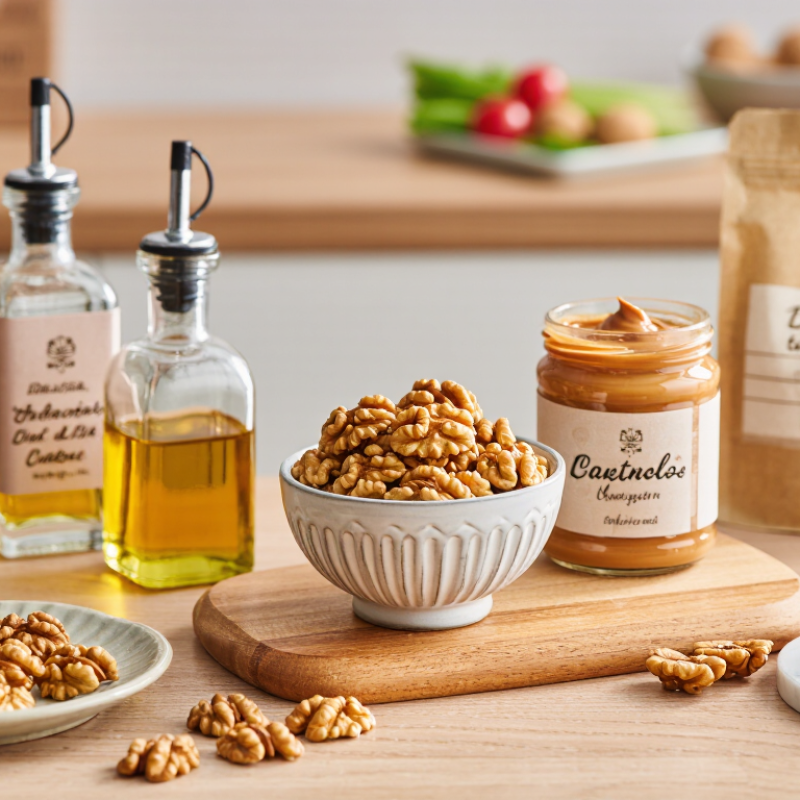
Walnut Food Products: Scope and Role in Global Trade
Walnut food products move through global trade in several forms: whole kernels, halves, pieces, meal, paste, and oil. Each serves a different use. Bakers may prefer pale, intact halves for visible toppings, while cereal makers often need consistent pieces that mix evenly. Walnut meal can add texture to fillings, but its fat content affects storage and handling.
Specifications matter. Buyers commonly compare kernel size, color, moisture, broken-piece levels, packaging, and harvest timing. A sample should be checked for flavor and texture, not just appearance. A clean, dry kernel with a mild nutty aroma is usually preferable; stale or bitter notes can signal quality concerns. Price alone tells little. A low-cost lot may produce more sorting loss or uneven results.
These products support trade by turning a seasonal crop into ingredients with varied shelf and processing uses. They appear in baked goods, snacks, sauces, and plant-based foods. Reliable sourcing depends on traceability, careful packing, and protection from heat and moisture, which can speed rancidity. Details vary by origin and processing method. One specification sheet cannot capture everything, and buyers may need to revise requirements after testing a production batch.