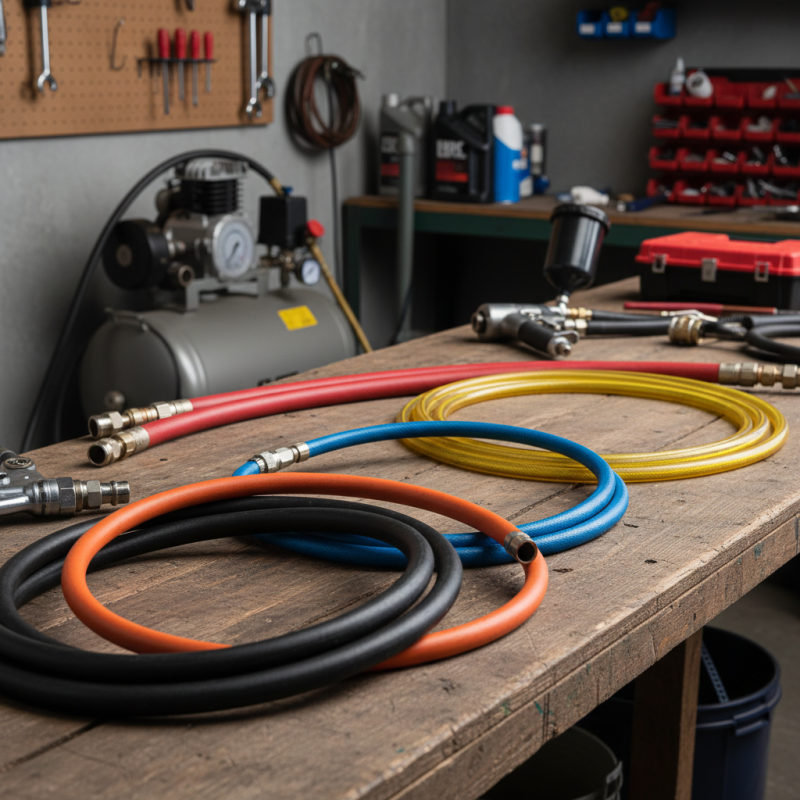
Ultimate Guide to Choosing the Right Rubber Air Hose?
Choosing the right rubber air hose can seem overwhelming. There are many factors to consider. This guide aims to simplify that process.
rubber air hoses come in various sizes and designs. Each type serves different purposes. Users often overlook important details in their selection. For instance, the hose's length impacts efficiency. A longer hose allows for more flexibility but may reduce air pressure.
It's also essential to evaluate the environment where the hose will be used. Extreme temperatures can affect durability. Users should think about how often they will switch hoses. Maintenance might be necessary to keep them functioning well. Make informed choices to avoid frustration later.
Understanding the Basics of Rubber Air Hoses: Material and Design
When selecting a rubber air hose, understanding the material and design is crucial. Rubber hoses are typically made from synthetic compounds or natural rubber, each offering distinct advantages. Synthetic rubber enhances durability and flexibility, ideal for various weather conditions. Natural rubber, on the other hand, may provide more elasticity but can wear quicker under harsh conditions.
Design plays a significant role in functionality. A well-designed hose should have a smooth interior to minimize friction. This helps maintain optimal airflow and pressure. Also, consider the diameter of the hose. A wider diameter can deliver more air, which might save time on bigger jobs. However, bigger isn’t always better. It can lead to awkward handling and limited storage.
Consider the length as well. A longer hose may offer flexibility in movement but can lead to decreased pressure at the end. Measure your space carefully. Sometimes, shorter hoses are surprisingly more efficient. Reflecting on these details can help you find the right fit, yet it’s easy to overlook specific needs initially. So, choose wisely!
Pressure Ratings of Common Rubber Air Hose Types
Key Specifications to Consider: Diameter, Length, and Working Pressure
When choosing the right rubber air hose, key specifications matter. Diameter is crucial. A larger diameter allows more airflow. However, it may be cumbersome for smaller tasks. Balance is key.
Length is another important factor. A longer hose provides greater reach but can reduce pressure. Think about your workspace. Does your project require extra length? A shorter hose prevents tangling, but you may need to switch connections often.
Working pressure is essential for safe operation. Ensure your hose can handle the pressures needed for your tools. Always check compatibility. Using the wrong hose can lead to failures.
Tip: Consider the terrain. If you're working outside, a heavy-duty hose may be more reliable. Also, don’t underestimate storage. Make sure the hose can be coiled neatly. This prevents kinks and prolongs its life.
Tip: When unsure, opt for a versatile size. It can handle more tasks. But remember, if it’s too bulky, it becomes hard to manage. Think about your needs and make a thoughtful choice.
Evaluating Durability: The Importance of Temperature and Chemical Resistance
When selecting a rubber air hose, evaluating durability is critical. Temperature resistance is key. Hoses exposed to extreme heat or cold can fail. For example, a hose that becomes rigid in low temperatures can crack easily. On the other hand, high temperatures can make the material soften, leading to leaks. Testing how a hose reacts under varied temperatures is essential.
Chemical resistance is another area to consider. Various environments expose hoses to different substances. Oils, solvents, and other chemicals can degrade materials quickly. A hose may look fine on the outside but is compromised internally. This hidden damage can be a disaster in the making. It's vital to know which chemicals a hose can withstand.
Choosing the right rubber air hose demands more than mere aesthetics. Durability involves understanding its material properties. Not every hose will meet your needs perfectly. Sometimes, a hose may perform well but not under specific conditions. Balancing all these factors ensures long-lasting service. It’s a complex puzzle, and each piece matters.
Selecting the Right Fittings and Couplers for Optimal Performance
When choosing fittings and couplers for rubber air hoses, materials matter. Brass and stainless steel are popular choices. They resist corrosion and ensure longevity. However, some users find plastic options appealing for their lightweight nature. Yet, plastic may not always withstand high-pressure situations.
Compatibility is another critical factor. Both the hose and fittings should match in size. A mismatch can lead to leaks or damage. Check pressure ratings too; ensure your couplers can handle the demands of your projects. Many people overlook this detail. It’s essential for safety and efficiency.
Investing time in proper selection pays off. Quality fittings improve air flow, enhancing tool performance. A faulty connection may cause interruptions. You might face productivity loss. Assess your requirements before purchasing. Your choice might greatly impact your overall experience.
Ultimate Guide to Choosing the Right Rubber Air Hose
| Dimension | Description | Recommended Size |
| Hose Diameter | Internal diameter of the hose which affects airflow | 1/4" to 3/8" |
| Hose Length | Length of the hose which determines working reach | 25 ft to 100 ft |
| Operating Pressure | Maximum pressure the hose can handle safely | 90 PSI to 300 PSI |
| Temperature Range | Temperature tolerance of the hose material | -20°F to 150°F |
| Material | Composition of the hose affecting flexibility and strength | Rubber, PVC, blended materials |
| Fittings and Couplers | Types of connections used with the hose | NPT, barbed, quick-connect |
Maintenance Tips to Extend the Lifespan of Your Rubber Air Hose
Maintaining your rubber air hose is essential for ensuring efficiency and longevity. According to industry statistics, proper maintenance can extend a hose's lifespan by up to 50%. Regularly inspecting your hose for cracks or abrasions is crucial. Small damages can lead to significant air leaks, reducing performance.
Tips: Store your air hose in a cool, dry place. Avoid leaving it in direct sunlight. UV rays can degrade rubber over time. Clean it regularly with mild soap and water to remove dirt and debris that can cause wear.
Another important aspect is to avoid over-tightening connections. This can stress the material, leading to premature wear. A study found that improperly maintained hoses can fail up to 30% sooner than those receiving regular care. Listen for any hissing sounds while using the hose. These may indicate leaks that should be addressed immediately.
Finally, rotate your hose periodically. If you use different lengths or types for various tasks, this practice can help distribute wear evenly. Remember, investing time in maintenance can save money on replacements later.