


What Is an Electric Rickshaw and How Does It Work?
An Electric Rickshaw is more than a small three-wheeled vehicle. It is a practical transport system built around a battery, electric motor, controller, and charging unit. Unlike a petrol rickshaw, it produces no tailpipe emissions during operation. This makes it attractive for crowded streets, short commutes, and neighborhood deliveries.
Professor Ashok Jhunjhunwala, a respected Indian electric-mobility researcher, has said, “Electric mobility is not simply replacing engines; it is redesigning transportation.” His observation explains why an Electric Rickshaw deserves careful study. The battery stores electrical energy, while the controller regulates power sent to the motor. When the driver presses the accelerator, the motor turns the wheels through a simple drivetrain. Many models use lithium-ion batteries, although lead-acid packs remain common because of their lower purchase cost.
The details matter. A typical vehicle may travel 80 to 150 kilometers on one charge, depending on battery size, passenger weight, road slope, speed, and weather. Charging can take several hours. Battery performance also declines with age, heat, poor charging habits, and irregular maintenance. Real life is less tidy than a product brochure suggests. Some operators may underestimate electricity costs or ignore brake and tire inspections. Safe charging, certified components, trained technicians, and responsible battery recycling improve reliability. This guide will examine how an Electric Rickshaw works, what its main parts do, and where its environmental and economic benefits may have limits. Small machine. Serious engineering.
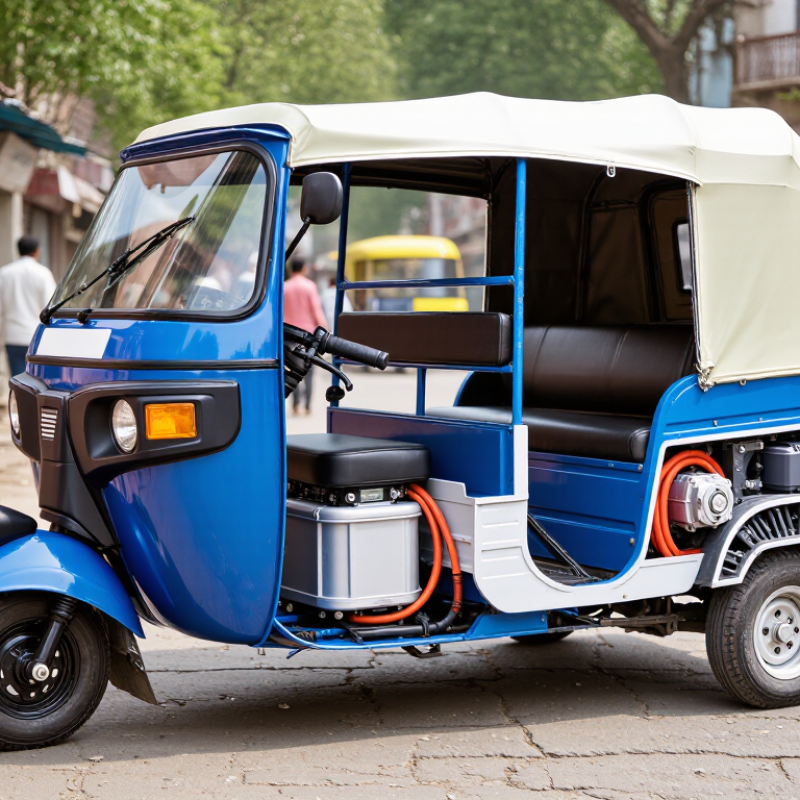
Electric Rickshaw: Definition and Main Components
What Is an Electric Rickshaw and How Does It Work?
An electric rickshaw is a compact three-wheeled vehicle powered by electricity instead of petrol or diesel. It usually carries passengers or light goods across short urban routes. Its main components include a rechargeable battery, electric motor, controller, charger, throttle, brakes, and a steel or aluminum frame. The battery stores electrical energy and sends it to the controller. The controller regulates current, while the motor turns that energy into wheel movement. Simple in theory.
The throttle controls speed through a handlebar or foot-operated input. Braking systems may combine mechanical brakes with electronic power cut-off protection. A differential or reduction gearbox can help the motor deliver torque at low speeds, especially on crowded streets or gentle slopes. The charger connects to a standard electrical supply and manages the battery’s charging cycle. Battery condition matters greatly. Heat, deep discharge, poor charging habits, and heavy loads can reduce performance. Small details matter.
In practical use, drivers should check tire pressure, brake response, cable connections, and unusual motor noise before operating. A loose terminal can cause intermittent power, which is easy to mistake for a motor failure. Range also varies with passenger weight, road surface, weather, driving habits, and battery age. Manufacturers often publish useful specifications, but real-world results may differ. That gap deserves honest attention.
