


Top 10 Vape Pin Types for Global Buyers
Global buyers often compare Vape Pin designs by appearance, yet the details that matter are less visible. Contact shape, dimensions, base material, and plating can affect fit, conductivity, and durability. Small parts matter. A pin can look correct and still fit poorly when tolerances differ between suppliers.
This guide introduces ten common pin types and explains where their designs may suit different device assemblies. It highlights practical checks, including pin diameter, spring travel, connection style, material specifications, and stated electrical ratings. These details help buyers ask clearer questions before requesting samples or placing orders. They do not guarantee compatibility. A careful fit test is still useful.
The right choice depends on the product design, manufacturing process, and destination market. Buyers should confirm that components meet applicable product requirements and obtain current documentation from suppliers. Where specifications are unclear, request drawings, material details, and test information. Not always obvious. A polished product page may omit an important measurement. This overview offers a starting point, not a substitute for engineering review or independent verification. It also recognizes that supplier data can vary in detail and quality. That gap deserves attention. Comparing the ten types side by side can make trade-offs easier to discuss, while helping teams avoid choosing a pin on appearance alone.
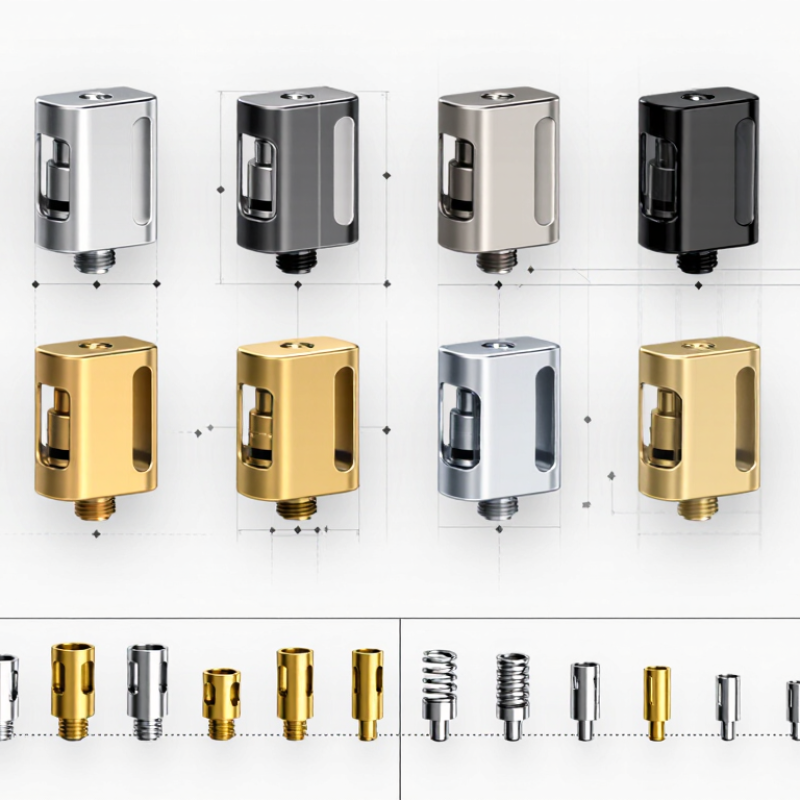
What Vape Pins Are and How They Connect Device Components
Vape pins are conductive contacts that link a device’s power source to its atomizer assembly. They help complete the electrical path and keep adjoining components aligned. Common forms include fixed center pins, spring-loaded pins, pogo-style contacts, and magnetic contacts. A threaded connection may also use a center pin to carry current.
Small parts. Spring travel can help maintain contact when components sit slightly unevenly, while a fixed pin relies more on precise fit. Too little pressure can cause intermittent connection; too much can wear contact surfaces.
Grand View Research valued the global e-cigarette and vape market at USD 28.17 billion in 2023. That figure provides market context, not evidence of pin quality.
For connector testing, the IEC 60512 series describes methods for evaluating properties such as contact resistance and mechanical operation; it is not a vape-pin certification. On inspection, engineers can check pin movement, surface condition, and consistent seating, then test electrical continuity with suitable equipment.
One detail is easy to miss: a pin may look clean yet still make unreliable contact. Pin dimensions and materials also vary, so a design that fits one assembly may not suit another.
