| Cylindrical roller brush | Tufts or continuous bristles arranged around a cylindrical core; fitted to a rotating shaft or powered cleaning head. | Polypropylene (PP) or polyamide (nylon) core; nylon or PBT bristles; stainless-steel or corrosion-resistant alloy shaft. | Brushing broad, relatively flat tank floors and accessible wall sections. | Rotating action provides repeated contact across the brush width. Bristle stiffness and roller diameter can be selected for the surface and access space. | Match roller width, diameter, bristle stiffness, and rotation speed to the tank opening and surface finish. |
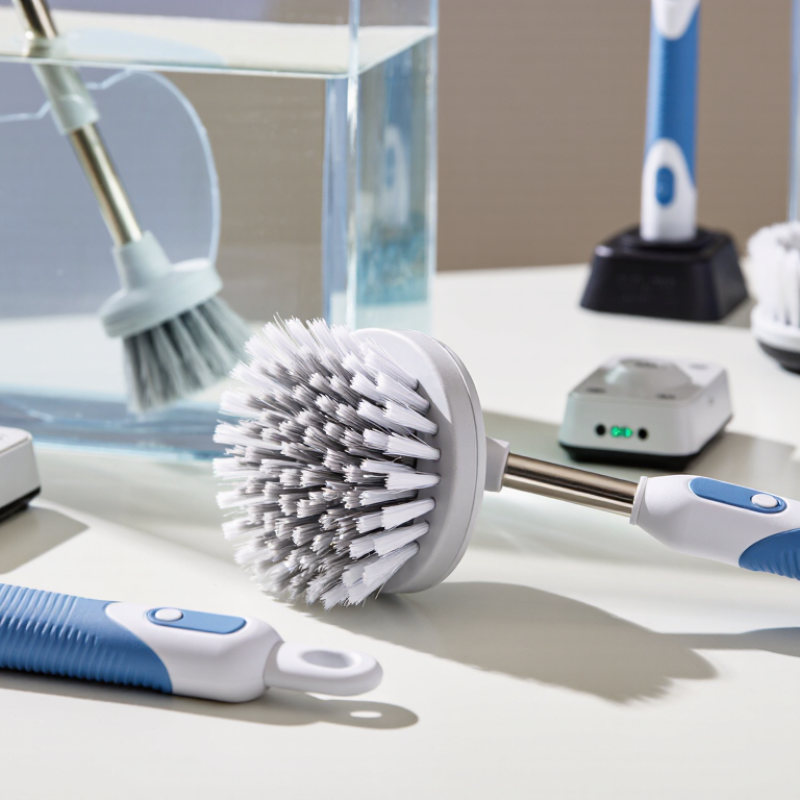
| Disc brush | Flat circular brush mounted on a drive spindle, with bristles facing outward from the disc. | PP or nylon backing; nylon or PBT bristles; stainless-steel or polymer drive components, depending on the design. | Cleaning flat surfaces, corners, and areas reached by a handheld or pole-mounted electric tool. | Compact head geometry supports controlled, localized scrubbing; interchangeable discs may allow different brush diameters or bristle grades. | Check the disc diameter and edge profile to ensure the brush can reach the intended areas without striking fittings. |
| Cup brush | Bristles arranged around a cup-shaped body, commonly used with a powered spindle. | Nylon or PBT bristles with a polymer or corrosion-resistant metal cup and hub. | Targeted cleaning of localized deposits and surfaces around openings or projections. | The surrounding bristle pattern helps keep the working area compact and provides contact around the brush perimeter. | Confirm that the cup depth and outside diameter suit the space; avoid excessive pressure on thin coatings or plastic surfaces. |
| End brush | Small, round brush with bristles concentrated at the end of a narrow shank or spindle. | Nylon or PBT filaments; polymer or stainless-steel shank, depending on the tool and intended environment. | Detail work in narrow recesses, around fittings, and in other confined areas. | Small brush profile improves access to spots that larger roller or disc brushes cannot reach. | Use a suitable shank length and diameter; check that the tool can be operated without damaging nearby seals or components. |
| Strip or flexible brush | Linear bristle strip fixed to a backing or support, sometimes shaped to follow a curved surface. | PP or nylon backing; nylon or PBT bristles; corrosion-resistant fasteners where required. | Brushing along seams, edges, and accessible curved sections, depending on the holder and tool arrangement. | Flexible mounting can help the brush conform to modest changes in surface contour. | Assess how the strip is retained and whether the backing and fasteners are compatible with the cleaning environment. |
| Abrasive-nylon brush | Nylon filaments containing embedded abrasive particles, fitted in a disc, roller, or other brush format. | Abrasive-filled nylon filaments; polymer or corrosion-resistant brush core. | More intensive removal of stubborn deposits where the tank surface can tolerate abrasive contact. | Abrasive particles increase the cutting action compared with plain nylon bristles. | Use only after confirming surface compatibility; abrasive brushes can scratch coatings and softer plastics. |
| Drive system and speed control | Electric motor connected to a brush head through a shaft, gearbox, or direct-drive arrangement. | Motor housings and drive components vary by tool design; exposed parts should be selected for the intended moisture conditions. | Provides powered rotation for brush heads used in tank-cleaning equipment. | Variable speed and suitable torque help adapt brush action to different brush sizes and cleaning tasks. | Check operating speed, torque, duty cycle, shaft compatibility, and the tool’s stated protection rating. A protection rating does not by itself establish suitability for immersion. |
| Moisture protection and sealing | Seals, covers, and protected electrical connections designed for the equipment’s specified operating environment. | Elastomer seals and corrosion-resistant hardware may be used; exact materials depend on the equipment specification. | Relevant when cleaning involves splashing, damp surfaces, or work near water. | Ingress-protection ratings describe protection against defined dust and water ingress tests; they should be interpreted according to the product’s rating and instructions. | Verify the rating and operating limits for the complete tool. Do not assume a brush or motor is safe for underwater use unless the product is specifically rated for it. |
| Brush stiffness and filament selection | Bristle diameter, length, material, and tuft density determine the brush’s working feel and contact behavior. | Common synthetic options include nylon, PBT, and polypropylene filaments. | Allows brush contact to be tailored to tank surfaces and the type of deposit being removed. | Stiffer or shorter bristles generally provide firmer contact; softer or longer bristles are more compliant. Actual performance also depends on speed and applied pressure. | Choose bristles based on the tank material and coating, and test on a small area when surface compatibility is uncertain. |
| Material compatibility and hygiene | Brush and tool materials selected for the water type, cleaning chemicals, and applicable hygiene requirements. | Material choices vary; potable-water applications require components and cleaning procedures suitable for the applicable local regulations. | Important for tanks used for drinking water, process water, or other applications with specific cleanliness requirements. | Compatibility depends on the complete assembly, including filaments, core, shaft, seals, lubricants, and cleaning agents. | Confirm compliance documentation and chemical compatibility with the supplier; do not infer potable-water suitability from material names alone. |