


What Is a Door Entry System?
A door entry system controls who can enter a building and when access is allowed. Door Entry Systems may use keypads, proximity cards, mobile credentials, intercoms, or biometric readers. Each method serves a different purpose. A small office may need a simple keypad. A residential block may require video communication and remote unlocking.
When someone presents a credential, the reader sends information to a controller. The controller checks permission and activates the electric lock when access is approved. Many systems also record entry times, helping managers investigate unusual activity or manage staff access. A visitor can press a call button, speak with an occupant, and appear on a screen before entry is granted.
Security depends on more than the reader. It includes reliable locks, protected wiring, sensible user permissions, backup power, and regular testing. Physical details matter. A damaged door closer can leave a secure entrance partly open. Poor lighting can make a camera less useful.
No system is perfect. Technology can fail. Users can forget credentials. A rushed installation may create new weaknesses. Therefore, site surveys and professional configuration are essential. Privacy should also be considered, especially when video or biometric data is collected. Keep records limited, protected, and necessary.
The best solution matches the building, occupants, risks, and budget. It should remain usable during everyday routines, including deliveries, emergencies, and staff changes. This guide explains how Door Entry Systems work, where they are used, and what to evaluate before choosing one. Expect practical answers, but also a few limitations worth questioning.
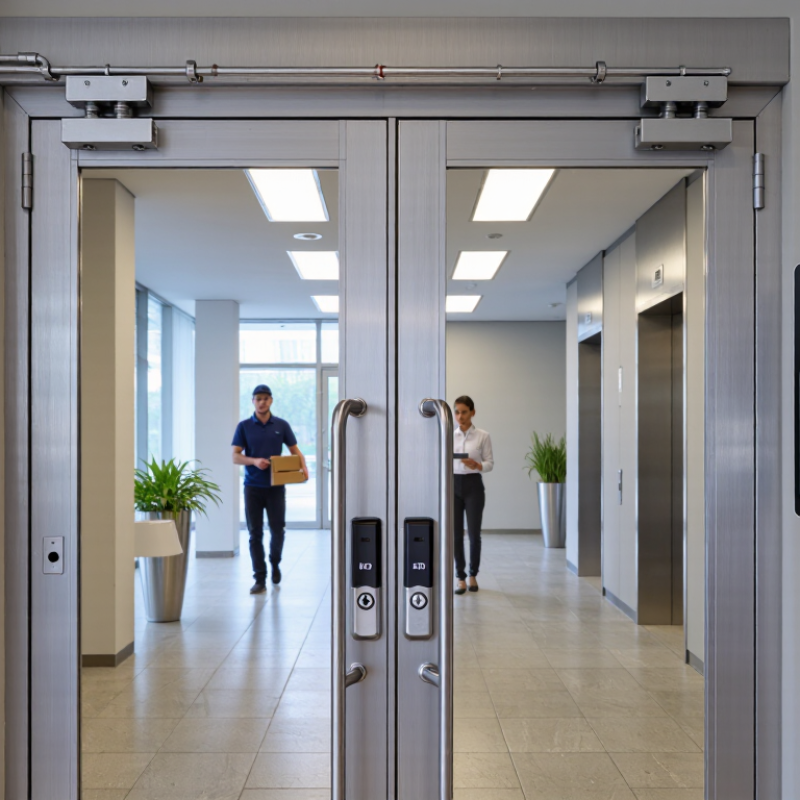
What Is a Door Entry System? Definition and Core Components
What Is a Door Entry System?
A door entry system manages access at a specific doorway. It verifies a person, releases a lock, and records the event. The core setup usually includes an exterior reader, an electronic lock, a controller, a power supply, and management software. A reader may accept a card, mobile credential, PIN, or biometric identifier. The controller checks permission before sending power to the lock. A door-position sensor confirms whether the door opened or remained forced.
The system also needs safe exit hardware. Request-to-exit devices help prevent false alarms when someone leaves normally. Intercoms add voice or video communication for visitors. In larger buildings, audit logs connect entry events with time, location, and user identity. MarketsandMarkets reported that the global access control market could grow from USD 8.6 billion in 2023 to USD 12.8 billion by 2028. That growth reflects stronger demand for managed building access, not just smarter locks.
The lock is rarely the weak point. Poor wiring, weak network protection, or an untested backup battery can undermine the whole installation. A practical design should consider fire egress, power failure, privacy, and maintenance access. The National Fire Protection Association stresses that egress doors must remain usable during emergencies. A perfect system on paper may still fail at a busy entrance. Regular testing matters. So does human judgment.
What Is a Door Entry System? Definition and Core Components
| Dimension | Core Element | Definition, Function, or Typical Characteristics |
|---|---|---|
| Definition | Door Entry System | An electronic security and communication system that allows occupants or authorized personnel to identify visitors, communicate with them, and control access to a door or entrance. |
| Primary Purpose | Controlled Entry | It helps prevent unauthorized access by requiring identification, approval, or a valid credential before the door is unlocked. |
| Visitor Identification | Indoor Station or Mobile Interface | Residents or staff can view, hear, or otherwise verify a visitor before granting access. Systems may use audio, video, or app-based communication. |
| Outdoor Hardware | Entrance Panel | Installed near the external entrance and commonly includes a call button, speaker, microphone, camera, directory, and credential reader. |
| Communication | Audio or Video Intercom | Enables two-way communication between the visitor and the occupant or security personnel. Video capability adds visual verification. |
| Access Authorization | Credential Reader | Accepts approved credentials such as PIN codes, proximity cards, mobile credentials, biometric data, or QR codes, depending on the system design. |
| Door Release | Electric Locking Device | An electric strike, electromagnetic lock, or motorized lock releases the door after access is approved. The selected lock must match the door and safety requirements. |
| Control Logic | Controller | Processes requests, verifies credentials, operates the lock, and may store access permissions and event records. |
| Power Supply | Power Unit and Backup | Provides suitable electrical power to the controller, entrance panel, reader, and lock. Backup power can help maintain operation during a power interruption. |
| Exit Safety | Request-to-Exit Device | A push button, sensor, or exit bar allows authorized occupants to leave without presenting an external credential. |
| Emergency Protection | Fire and Emergency Integration | Where required by local regulations, the system can interface with fire alarms, emergency release devices, and other life-safety equipment. |
| Connectivity | Wired or Network Connection | Systems may communicate through dedicated wiring or an IP network. Networked designs can support centralized management and remote administration. |
| Access Methods | Authentication Options | Common methods include voice approval, video verification, PIN entry, cards, key fobs, mobile devices, biometrics, and temporary visitor codes. |
| Management | Administration Software | Authorized administrators can add or remove users, assign access schedules, configure doors, issue temporary permissions, and review system activity. |
| Monitoring | Event Logging | Many systems record events such as successful entries, denied attempts, door openings, forced-door conditions, and communication activity. |
| Typical Locations | Residential and Commercial Entrances | Common applications include apartment buildings, offices, schools, healthcare facilities, public buildings, gated communities, and controlled service areas. |
| Security Benefit | Visitor Screening and Traceability | The system improves awareness of who is requesting entry and can provide an auditable record of access events when logging is enabled. |
| Important Design Factor | Fail-Safe or Fail-Secure Behavior | Lock behavior during power loss must be selected according to security, evacuation, fire-safety, and local regulatory requirements. |
| System Limitation | Installation and Maintenance Requirements | Reliable operation depends on correct wiring, compatible locks, adequate power, weather protection, software management, and regular testing. |
