Why Choose a UAV Station for Automated Drone Operations?
Why Choose a Uav Station for Automated Drone Operations?
Automated drone work is moving beyond occasional flights. It now supports inspections, mapping, security monitoring, agriculture, and emergency response. A UAV Station gives these operations a fixed base, charging system, weather protection, and remote communication. Imagine a drone returning after a coastal inspection, landing precisely, and charging without an operator standing nearby. That consistency saves time and reduces repetitive manual work.
Miriam McNabb, a long-time drone-industry analyst and editor, captures the practical principle clearly: “Automation should remove repetitive risk, not remove human responsibility.” Her observation matters. A UAV Station can schedule missions, monitor battery levels, and send alerts when conditions change. It can also preserve flight records, maintenance notes, and operational data. These details support safer decisions and stronger accountability.
The technology is not magic.
Cloud cover can weaken planning. Salt air may damage exposed components. A blocked communication link can stop a mission unexpectedly. Operators still need training, maintenance routines, and careful site assessments. I have seen product discussions focus heavily on launch speed while giving too little attention to recovery procedures. That is a weakness worth admitting. The best system is not simply the fastest one. It is the system that performs reliably, explains its status, and fails safely.
This introduction examines why organizations choose a UAV Station for automated drone operations. It considers efficiency, safety, data quality, maintenance, and long-term operating value. The goal is practical understanding, not exaggerated promises.
What Is a UAV Station and How Does It Support Drone Operations?
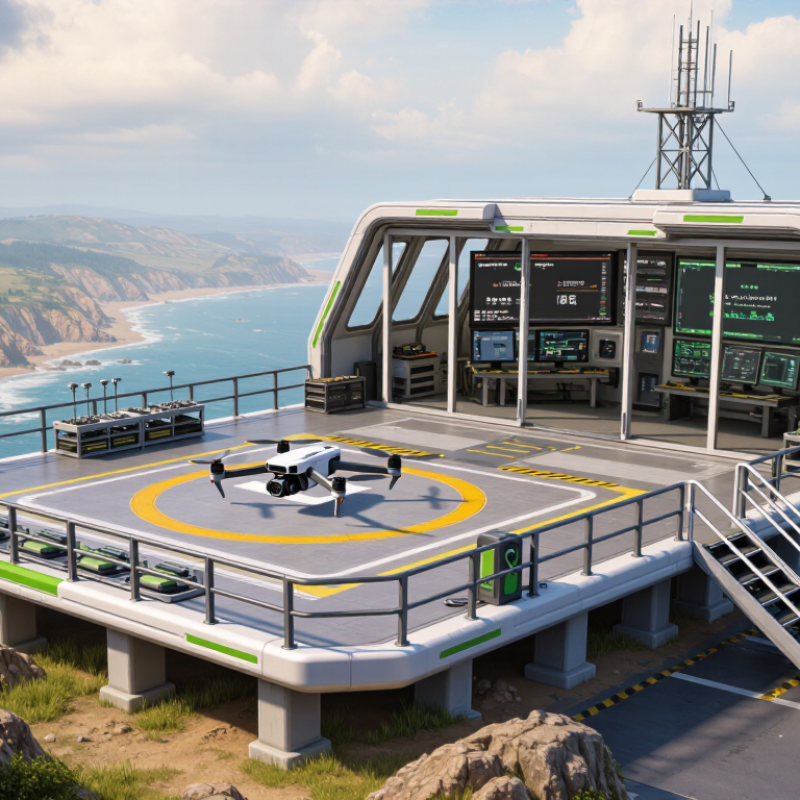
A UAV station is a sheltered, automated base for unmanned aircraft operations. It typically combines a landing platform, battery charging, weather sensing, communications, and mission software. The aircraft returns to the station, lands on marked guides, and begins recharging without manual handling.
This matters as commercial drone use expands. Drone Industry Insights’ Global Drone Market Report 2024 estimates the global drone market could grow from about $30 billion in 2023 to more than $55 billion by 2030. A UAV station helps operators manage repeated flights with fewer interruptions. It can schedule missions, monitor battery temperature, check wind conditions, and send alerts when equipment needs inspection. Small details matter. A wet landing pad can delay the next flight.
The station does not remove operational responsibility. Operators still need trained personnel, approved flight areas, maintenance records, and privacy controls. The FAA’s 2024 Aerospace Forecast describes continued growth in commercial small unmanned aircraft activity, increasing pressure on reliable procedures and airspace coordination. Yet automation is not perfect. Poor cellular coverage, dust, ice, or a weak positioning signal may stop a mission. That failure is useful feedback. Operators should test manual recovery, review every flight log, and avoid assuming that “automated” means “unattended.”