


What Are the Best Wheelchair Accessible Vehicles in China?
Choosing among wheelchair accessible vehicles in China is not simply a matter of finding the largest van. Door width, ramp angle, turning space, restraint systems, and access to servicing can shape everyday journeys. A vehicle that works well on a showroom floor may feel different on a crowded street or narrow residential driveway.
The need is significant, but the figures require careful interpretation. The World Health Organization’s 2022 Global Report on Assistive Technology estimates that 2.5 billion people worldwide need one or more assistive products; nearly one billion lack access. Its 2023 disability fact sheet says about 1.3 billion people experience significant disability. These are global estimates, not counts of people who need adapted vehicles in China. China’s National Bureau of Statistics reported 296.97 million residents aged 60 or older at the end of 2023, representing 21.1% of the population. Age alone does not indicate a need for wheelchair transport.
So, what are the best wheelchair accessible vehicles for Chinese buyers? This guide compares practical features, including side-entry and rear-entry layouts, manual and powered ramps, cabin dimensions, and passenger restraints. It also considers how a vehicle suits daily use, family travel, and local support needs. Details matter. Published specifications can be incomplete, and a ramp’s stated capacity does not tell the whole story. Where evidence is limited, that uncertainty should be stated—not glossed over. The most useful choice is the one that fits the passenger, caregiver, route, and budget in real life.
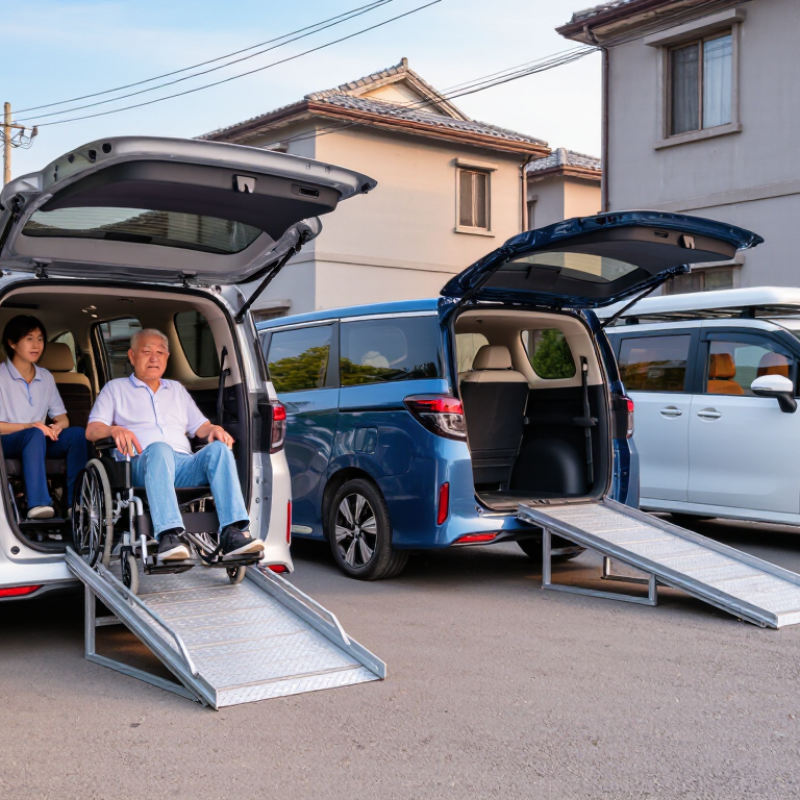
How Wheelchair-Accessible Vehicles Are Classified in China
In China, “wheelchair-accessible vehicle” describes a function, not one universal vehicle class. A practical classification looks at three things: entry method, wheelchair position, and service use.
Ramp or lift? Rear-entry ramps can work well where roadside space is tight; side-entry designs need more clearance. Powered lifts are useful for higher floors, but add weight and maintenance needs.
The wheelchair may be secured inside while its user remains seated, or the passenger may transfer to a standard seat. These layouts differ in floor space, restraint systems, and the room needed for a caregiver. Vehicles also serve different roles: private travel, accessible taxis, or community shuttles.
In China, these are useful engineering categories, not necessarily separate legal vehicle classes. Buyers should check the approved vehicle configuration and conversion documents, rather than relying on a sales label.
The World Health Organization’s 2022 Global Report on Health Equity for Persons with Disabilities estimates that 1.3 billion people, or 16% of the global population, experience significant disability. That figure is not a count of wheelchair users, but it shows why access design matters.
Real journeys expose gaps that a specification sheet can miss: a steep curb, a narrow parking bay, or a ramp that meets the ground at an awkward angle. Classification helps compare vehicles, but it cannot replace an actual boarding and restraint test.
Related Posts
-

Ultimate Guide to Choosing the Best Mobility Vans for Your Needs
-

Exploring the Growth of Mobility Vans Industry at the 138th Canton Fair 2025 in China
-

Choosing the Right Mobility Vans: A Comprehensive Guide for First-Time Buyers
-
Top 10 Mobility Vans for 2025: Features, Pricing, and Best Options
-
China Top 10 Wheelchair Accessible Vehicle Manufacturers
-
Top 10 Best Wheelchair Vans for Sale
