Go to Main Content Go to Footer

What Is a Wheelchair Accessible SUV?

A wheelchair accessible SUV is a sport utility vehicle adapted to help a wheelchair user enter, ride, and exit with greater independence. Depending on the person and vehicle, adaptations may include a lowered floor, a rear or side-entry ramp, securement points, and room for a seated passenger. The right setup is personal. A ramp that looks wide in a showroom may feel steep at home.

Disability-rights scholar James I. Charlton’s influential book carries the principle, “Nothing About Us Without Us.” It is not an SUV-specific recommendation, but it offers a useful standard: the wheelchair user should help assess the vehicle and its adaptations. Measure the chair’s width and height. Check doorway clearance, interior headroom, seating position, and the space needed for caregivers. A trained mobility-equipment professional can help evaluate fit and explain how a conversion affects daily use.

Details matter. Can the ramp open in a tight parking space? Is there enough room for bags, a folded walker, or a child’s seat? Can the passenger see comfortably through the windows? Even a polished showroom photo can hide a poor fit. That is worth remembering. This guide explains common wheelchair accessible SUV designs, key features, and practical questions to ask before choosing one. A careful evaluation may take time, and no single model works for everyone.
What Is a Wheelchair Accessible SUV?

Definition and Purpose of a Wheelchair Accessible SUV

What Is a Wheelchair Accessible SUV?

Definition and Purpose of a Wheelchair Accessible SUV

A wheelchair accessible SUV is a vehicle modified to help a wheelchair user enter, ride, and exit with greater ease. Its purpose is practical: make everyday trips, appointments, and family outings more accessible. Depending on the conversion, it may include a lowered floor, a side- or rear-entry ramp, and space to remain seated in a wheelchair. Securement and occupant restraint systems help keep the passenger safely positioned during travel. Not every accessible SUV supports the same seating arrangement.

The World Health Organization’s 2023 disability fact sheet estimates that about 1.3 billion people, or 16% of the global population, experience significant disability. This is not a count of wheelchair users, but it shows why accessible transport matters. A ramp alone is not enough. Doorway clearance, interior height, turning room, and transfer needs can determine whether a vehicle works in real life. A trained mobility-vehicle evaluator can help assess these details. Before choosing a vehicle, measure the wheelchair and consider who will assist with entry. A careful test fit may reveal problems that a specification sheet misses.

How Wheelchair Accessible SUVs Are Modified

What Is a Wheelchair Accessible SUV?

How Wheelchair Accessible SUVs Are Modified

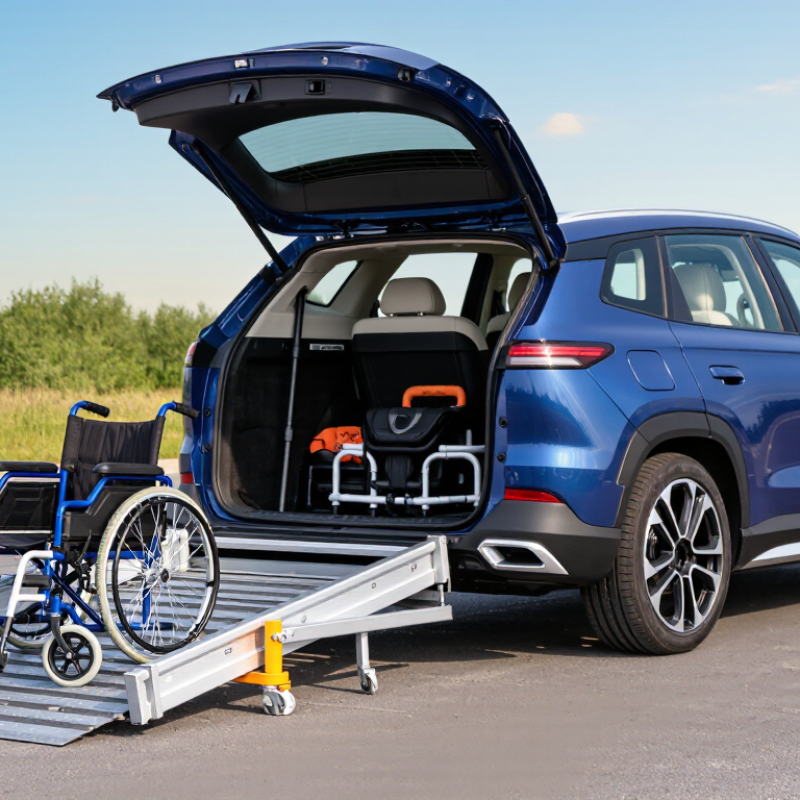
A conversion usually starts with the SUV’s interior layout and the wheelchair user’s daily needs. Some models allow a lowered floor, creating more headroom and a gentler ramp angle. Technicians may also raise the roof or widen an entryway. Entry can be through a side door or the rear, depending on the vehicle’s design.

Details matter.

A ramp may fold manually or operate with a powered mechanism. Some vehicles use a lift instead, which can help when a ramp is too steep or space is limited. Inside, reinforced floor anchorages secure the wheelchair during travel. A separate lap-and-shoulder belt protects the occupant; it should not be confused with the wheelchair’s tie-downs.

Fit is personal.

The finished layout may include repositioned seats, hand controls, or space for a caregiver. These changes affect turning room, visibility, and how easily someone can enter and exit. A conversion specialist should check clearances and explain how to operate the equipment. Ask about routine inspections, too. A ramp that feels smooth in a showroom may behave differently on uneven ground, and that deserves honest attention. The right setup depends on the specific SUV, chair, and transfer routine, so measurements and a hands-on assessment are more useful than assumptions.

Key Entry, Seating, and Safety Features

What Is a Wheelchair Accessible SUV?

Key Entry, Seating, and Safety Features

A wheelchair accessible SUV is modified to make entry and travel easier for someone who remains seated in a wheelchair. Common entry options include a powered lift or ramp, a lowered floor, and wider door openings. Some vehicles can lower closer to the ground, reducing the step from a curb.

Measure the driveway and parking space, too. A ramp can look effortless in a brochure; in a narrow driveway, it may feel less simple.

Seating arrangements vary. Some layouts let a passenger stay in their wheelchair, while others provide a transfer seat that turns or slides outward. Check interior height, knee room, and the space needed to turn and secure the chair.

A few inches matter.

A caregiver should be able to reach the controls without leaning across the passenger.

Not every setup fits.

For travel, the wheelchair should be secured using a compatible tie-down system, and the occupant should use an appropriate occupant restraint. These serve different purposes. Ask a qualified mobility-vehicle professional to assess the wheelchair, seating position, and vehicle together; suitability depends on the specific setup.

Before choosing, test the entry route and practice securing the chair. Watch for loose straps, awkward reach, or a ramp angle that feels uncomfortable. Small details are easy to miss.

Common Conversion Types and Their Differences

A wheelchair accessible SUV is modified to let a wheelchair user enter, travel, and exit with less physical effort. Most conversions add an entry opening, a ramp or lift, and securement points inside. Some also lower part of the floor or raise the roof to create more headroom. Fit matters. The SUV’s interior shape affects doorway width, ramp angle, and space for turning.

Side-entry conversions place the ramp beside the front or rear passenger area. They may allow a wheelchair user to sit near other passengers, but a narrow parking space can make entry difficult.

Rear-entry conversions use a ramp at the back. They can work well when side access is blocked, though loading may require room behind the vehicle. Neither layout suits every routine.

Manual ramps are simpler, while powered ramps reduce the effort of deployment but add moving parts that need maintenance. A lift raises the wheelchair into the vehicle and may help when a ramp would be too steep or long. Not every SUV can accommodate each conversion. Before choosing, check the wheelchair’s dimensions, seated height, turning space, and preferred travel position with a qualified conversion professional.

Small details matter: a few inches of clearance can change whether entry feels controlled or awkward.

Factors to Consider When Choosing an Accessible SUV

A wheelchair-accessible SUV is adapted so a wheelchair user can enter, ride, and exit with less strain. The right setup depends on how the person travels: seated in a wheelchair or transferring to a vehicle seat. Fit matters. The CDC’s 2018 analysis of 2016 Behavioral Risk Factor Surveillance System data found that 13.7% of U.S. adults had a mobility disability. That figure is a reminder that needs vary widely; it does not tell you which vehicle will fit one person.

Measure the occupied wheelchair, including footrests and hand rims, then compare those dimensions with the doorway, ramp, and cabin. Check the ramp’s slope and the space needed to turn or position the chair. A few inches can change whether entry feels manageable. Also confirm payload capacity: the wheelchair, passenger, adaptations, and other occupants all add weight. Ask a qualified mobility-vehicle specialist to verify securement points, restraint fit, headroom, and access to controls. Try the actual route, if possible—from curb to parking spot, including a tight turn. Small detail. Consider visibility, ride comfort, and storage for bags or mobility aids, too. A roomy cabin may still feel awkward on a steep ramp. Test it before deciding.

What Is a Wheelchair Accessible SUV? - Factors to Consider When Choosing an Accessible SUV

Factor What It Means What to Check Practical Consideration
Accessible entry A vehicle modified to let a wheelchair user enter and travel in the vehicle without transferring to a standard seat. Ask whether access is through a side door or the rear, and whether the ramp or lift suits the intended wheelchair and user. An SUV is not wheelchair accessible just because it has generous cabin space; accessibility generally depends on a suitable conversion.
Ramp or lift The entry device provides a route into the vehicle. Ramps use an inclined surface; lifts raise and lower the wheelchair and user. Check usable width, slope or platform size, operating method, weight capacity, and the space needed to deploy it. Test entry in the actual parking or driveway conditions you expect to encounter. Requirements differ by device and conversion.
Door and entry clearance The opening must provide enough space for the wheelchair to pass through and turn into its travel position. Measure the narrowest opening and compare it with the wheelchair’s overall width, including hand rims, controls, or accessories. Ask for measurements of the converted vehicle rather than relying on the unmodified SUV’s door-opening dimensions.
Interior height and floor layout The user needs adequate headroom and a suitable path from the entry point to the wheelchair’s secured travel position. Check clearance with the user seated in their wheelchair, including any headrest or positioning equipment. Conversion work can change the floor height and available cabin space. Confirm the finished interior measurements in person.
Wheelchair securement and occupant restraint Securement equipment anchors the wheelchair; a separate occupant restraint system helps protect the passenger during travel. Ask how the wheelchair is secured, how the passenger’s belt is positioned, and whether the setup is suitable for the specific seating configuration. Follow the vehicle and equipment instructions, and have the system demonstrated by a qualified mobility professional.
Wheelchair and passenger fit The wheelchair, user, and any mobility equipment must fit within the converted vehicle’s usable space and weight limits. Bring the wheelchair’s width, length, height, and total occupied weight, along with details of accessories and seating needs. Fit depends on the exact chair and conversion. A test fit is more reliable than assuming that a larger vehicle will work.
Seating and passenger capacity A wheelchair position may take space that would otherwise be used by a passenger seat or cargo area. Confirm the number of usable seats with the wheelchair position occupied and check whether seats can be removed or repositioned. Passenger capacity varies by model and conversion layout; verify the final seating arrangement and approved seating positions.
Vehicle fit and everyday use The vehicle must work with the user’s usual routes, parking spaces, garage, and loading location. Check overall vehicle height and length, ramp deployment space, turning needs, and access to the intended parking area. A larger vehicle can offer useful space but may be harder to park or fit in a garage. Consider the complete converted vehicle dimensions.
Conversion, inspection, and support The conversion, vehicle, and accessibility equipment need to work together and be maintained over time. Request details about installation, warranty coverage, inspection and maintenance schedules, and local repair support. Confirm that the specific vehicle can accept the proposed conversion and that qualified service is available where you live.
Total ownership cost The purchase price is only one part of the cost of owning an accessible vehicle. Compare vehicle and conversion costs, financing, insurance, fuel or charging, routine service, and equipment upkeep. Costs vary with vehicle, conversion, location, and personal needs. Obtain itemized quotes and confirm what each warranty covers.

Specifications and compatibility vary by vehicle, conversion, wheelchair, and user. Verify measurements, weight limits, safety equipment, and fit with the vehicle provider before purchase.

Logo Access 360